When attending one of the largest high schools in Minnesota, it’s easy for students to find themselves slipping through the cracks of cliques and social groups with almost 3000 other students filling the halls. Finding others who share similar cultural or religious backgrounds can be difficult for many at EPHS. However, in an attempt to combat feelings of disconnect and disclusion, a variety of affinity groups strive to foster a sense of belonging for these students who are trying to find where they fit in.
The high school hosts a diverse collection of affinity groups (associations of students that share a similar part of their identity) including multiple student unions cultivating a sense of belonging for its members. Jewish Student Union Co-President Sydney Bond shares how she strives to help other Jewish students in EP find each other and be proud of their identities.
“Something that I try to accomplish is creating a space where Jewish teens can be proud of who they are,” she shared. Bond co-founded the association last year with junior Maya Ryaboy while discussing the lack of a space for Jewish students at the high school. Upon this realization, the pair decided to take the matter into their own hands and start JSU. “I want others to feel like it’s something they should be proud of, and create a place where they can just be, and don’t have to explain themselves to anyone.”
In Hennepin county, less than 1% of the population identified as Jewish as of 2020. Having an organization like JSU at the high school gives Jewish students an opportunity to feel connected rather than disconnected– and that was exactly the thought process that Bond and Ryaboy had when starting it. To foster a sense of belonging for their peers, the girls started hosting regular meetings to participate in different activities like team building, sharing Jewish foods, celebrating holidays, and more. “We have a lot of after school events to bring us all together like Shabbat dinners and crafts,” Bond shared an example. “We all keep in touch really well– when it’s a holiday, people in the group chat will say ‘Happy hanukkah’, or whatever it is we’re celebrating.”
The events hosted by the club give Jewish students a place to celebrate their identity through religious celebrations, meals, and other activities. JSU is a nationwide organization that Bond and Ryaboy decided to incorporate into EPHS’s many affinity groups through collaboration with the other members of the institution. As a school club and national organization, members of JSU at many other high schools in the area often get together to participate in different activities such as crafts and even pickleball. “The activities aren’t always related to being Jewish– but the main purpose of the club is just to bring Jewish kids together in a space where they don’t feel like they have to hide who they are,” Bond shared.
To Bond, one of the most special things about JSU is the opportunity it provides to celebrate together for Jewish students who don’t know others that celebrate the same religious holidays as they do. She shared that before starting the group, she didn’t know of many other Jewish kids at school and by bringing the organization to EPHS, she hoped that there would no longer be anyone else who felt like she did.
“Belonging is a really important part of JSU,” Bond explained. “I don’t think anyone would want to come to school if they didn’t feel any sense of belonging– so everything I do for the group is to make sure nobody feels that way.” Simply by population, the Jewish community is very underrepresented at EPHS– and not feeling a sense of belonging causes many to feel less motivated to come to school. JSU and other similar affinity groups give students of certain identities a place where they don’t feel “different” and provides them with a strong sense of community and belonging.
JSU is one of many affinity groups here at the high school that gives underrepresented students a sense of belonging. Similarly, Asian Student Union hosts fun and lighthearted events that bring students at the high school together. While the group is not limited to only Asian students, its events are inspired by Asian customs and traditions– inviting students of all backgrounds to appreciate Asian culture. The group is led by multiple officers– one being its president, senior Gus Jacobson, who joined ASU as a freshman to find a club that allowed him to get closer to his roots.
“I try to spread a lot of inclusivity, and make sure that everyone knows that they’re welcome in ASU,” Jacobson shared. “We get a lot of people asking ‘I’m not Asian, can I still join ASU?’, and I always say ‘everyone is welcome, yes’. You’ll have fun no matter what background you come from, and that’s what I think is really special about ASU.”
In comparison to JSU, ASU is more focused on introducing others to Asian culture than just providing one group with a sense of belonging. What makes different affinity groups unique to many at the high school are not only the different cultures that they represent, but also the demographics that they try to appeal to.
To engage students in Asian culture, the club hosts different activities such as their first event of this year that involved a giveaway of smiskis, which are Japanese glow in the dark collectables that come in “blind boxes” that were given out to incite higher attendance. The club also hosts a lot of events intertwined in Asian cuisine, including last year’s dumpling folding social that brought students together to bond over food.
“With our food events, which are definitely the most popular, we try to do a mix between traditional and more well known stuff. Last year when we did dumpling folding, there were a lot of people who had never done that before. But on the other side of that we also had a meeting where we all ate ramen, which is something pretty much everyone has tried before.” Incorporating different aspects of Asian culture in a way that includes everyone is part of what makes ASU one of the high school’s largest affinity groups in terms of members– with over 160 so far this year.
Increasing membership means finding more ways to include more kinds of people. Promoting inclusion is one of Jacobson’s biggest goals as the president of ASU. “Inclusion is really important in ASU and in general because its necessary to help people grow,” he explained. “Hindering that inclusion is hindering people from meeting others with a similar background as them. I think that having these kind of communities at the high school is really important to making sure everyone feels included.”
Jacobson explained how “Asia” is a very broad term to describe just one culture, as the continent is the largest in the world and holds over 2,300 different languages across its borders. One of the biggest challenges that ASU faces is trying to incorporate so many different cultures into just one club– which is why there are other affinity groups that represent a more specific group of people.
South Asian Student Union is another affinity group at the high school striving to create a space that educates and empowers South Asian students. The club’s president is senior Sid Shiva, who joined the group to find a place within the school that he felt welcomed in. Before receiving the role of president, Shiva participated in the group’s leadership as officer of outreach during his junior year, and was an active member prior. With South Asia being a very broad culture as well, Shiva took it upon himself as president to try his best to incorporate many different aspects of one culture.
“I think something that we really emphasize in SASU is that it’s a really huge culture, right?” Shiva explained. “Even though it can be defined as one group, there are so many different aspects and people within that one culture. A really important job for me is to make sure that every aspect and person within it is included.” While the official “south Asian” countries are Afghanistan, Bangladesh, Bhutan, India, Maldives, Nepal, Pakistan, and Sri Lanka, the group is mostly made up of Indian students, as Indian students are the vast majority of South Asians in Eden Prairie. Being president of SASU, it is Shiva’s job to recognize what culture the majority of the group comes from while also incorporating other South Asian traditions into the club’s meetings as well.
One popular SASU event is its annual “Diwali Social”. Diwali, a festival of lights, is a part of Hindu culture celebrated over 5 days every year that many South Asians at EPHS participate in. The celebration derives its images of light from the symbolization of victory of light over darkness/good over evil. In SASU’s Diwali Social, many different activities are held to celebrate the holiday. One common practice during Diwali is decorating diyas, which are oil lamps made out of clay that are painted with vivid colors and intricate designs. Decorating diyas is a big part of the Diwali Social at SASU, and the act of lighting them symbolizes dispelling ignorance and evil. Another popular Diwali Social tradition is musical chairs, which brings students together in a friendly competition that establishes a strong sense of community.
The events hosted by SASU are essential to bringing South Asian students together and forms belonging within the organization. To Shiva, making students feel like they belong is one of the most important parts of the club. “In such a big school, things often get really foggy which makes students feel like they aren’t being seen,” he explained. “With SASU, our main goal is to make sure that everyone feels seen no matter what.”
When Shiva was a freshman, joining SASU was key for him to find a place where he felt a true sense of belonging. This feeling is very similar to that of Maleah Hollway and Kadija Diallo, who also joined an affinity group their freshman year.
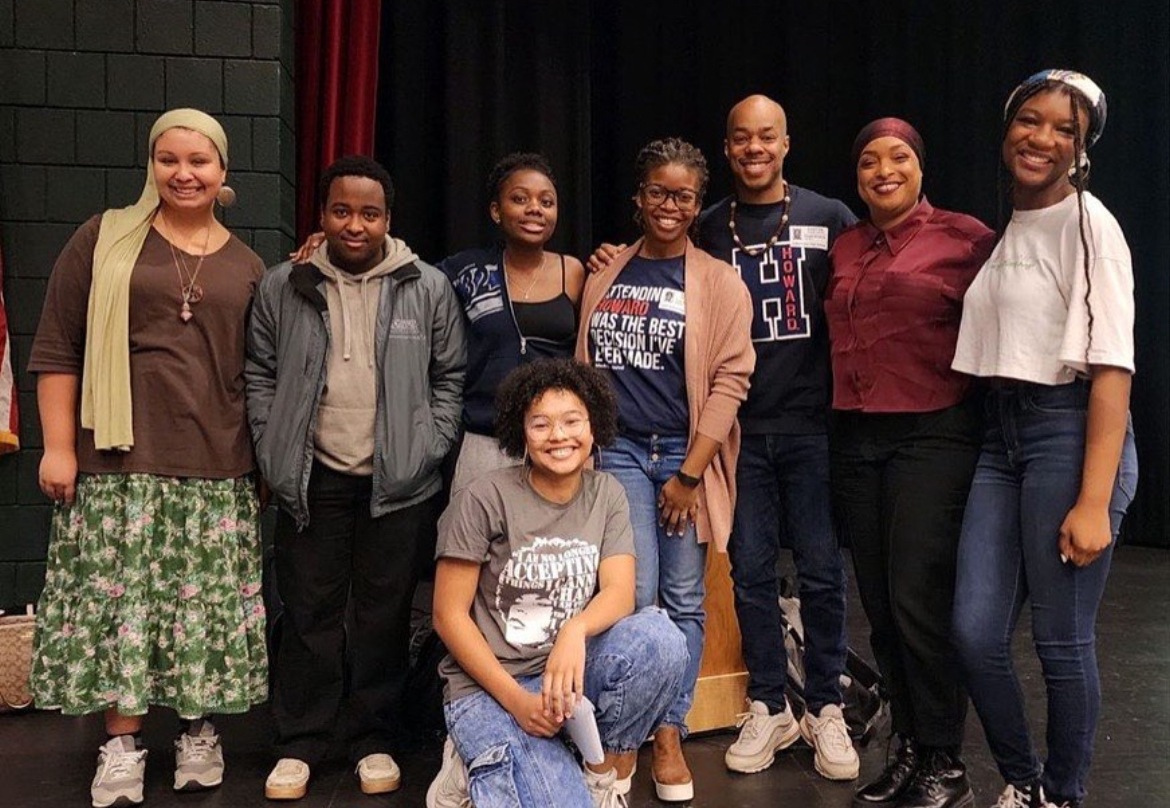
Black Student Union is the affinity group for Black students at EPHS. The group’s president, Maleah Holloway, shared that she joined BSU to push herself to get more comfortable with leadership and public speaking. Before being selected as the group’s president, she was examined by the leadership of the year before throughout her day to day life to ensure she’d be a good fit for the position. Throughout her short time as president so far, she has made efforts to promote BSU to become an even larger group.
“What I want to accomplish with BSU this year is making the group even bigger,” Holloway shared. “Even though it’s already a really big community, there are a lot of things we’re trying to do to make it even bigger. Last year’s leadership definitely hyped it up a lot, and I think that really contributed to how many new members we have this year.” For Holloway, increasing membership means increasing the traction that BSU gets as an established affinity group. The more popular it gets, the more Black students will learn about it and will be able to join a network of other students like them.
BSU’s vice-president Kadija Diallo built upon this idea. “The more people that join BSU means the more people we can connect to one another,” she explained. “And I think that for a lot of people, having connections with others like you gives you a good sense of belonging.” Providing Black students with a good sense of belonging is the main purpose of BSU, which is why increasing the organization’s bandwidth will allow its leaders to meet their goals.
“The importance of BSU,” Holloway shared, “is that it gives a space for everyone’s voice to be heard. Especially in a big school like EPHS, many voices go unheard, and our goal is to make sure that happens as little as possible.” BSU gives Black students at the high school an opportunity to ensure that their voice is heard– which is precisely the reason why Holloway wanted to lead the organization.
Like other affinity groups, BSU also must tackle representing a group of students that is so diverse. “There are so many different people in BSU,” VP Diallo explained. “I think that’s really the beauty of it. The diaspora is so diverse, and BSU gives everyone in it an opportunity to come together and share their different ideas with each other.
The group’s activities mainly consist of get-togethers where students of all different backgrounds can come together and appreciate the diversity of being Black. Holloway and Diallo strive to foster an environment that encourages diversity and inclusion, and BSU’s fast growing membership exemplifies this happening in real time.
In a school as large and fast-paced as EPHS, finding a space to feel truly seen and understood can be difficult, which is exactly what affinity groups are working to change. Clubs like JSU, ASU, SASU, and BSU offer students the opportunity to connect with others who share their cultural or religious backgrounds, and in doing so, help them feel less alone. These groups create safe, welcoming environments where students don’t have to explain themselves for who they are.
Through shared meals, cultural traditions, holiday celebrations, and day-to-day support, these organizations foster a sense of belonging that many students might not find elsewhere in the school. And while each group represents a different identity or culture, they all share a common goal: to build community, uplift voices, and make sure no student slips through the cracks. In a student body of nearly 3,000, that kind of support makes a lasting impact.