

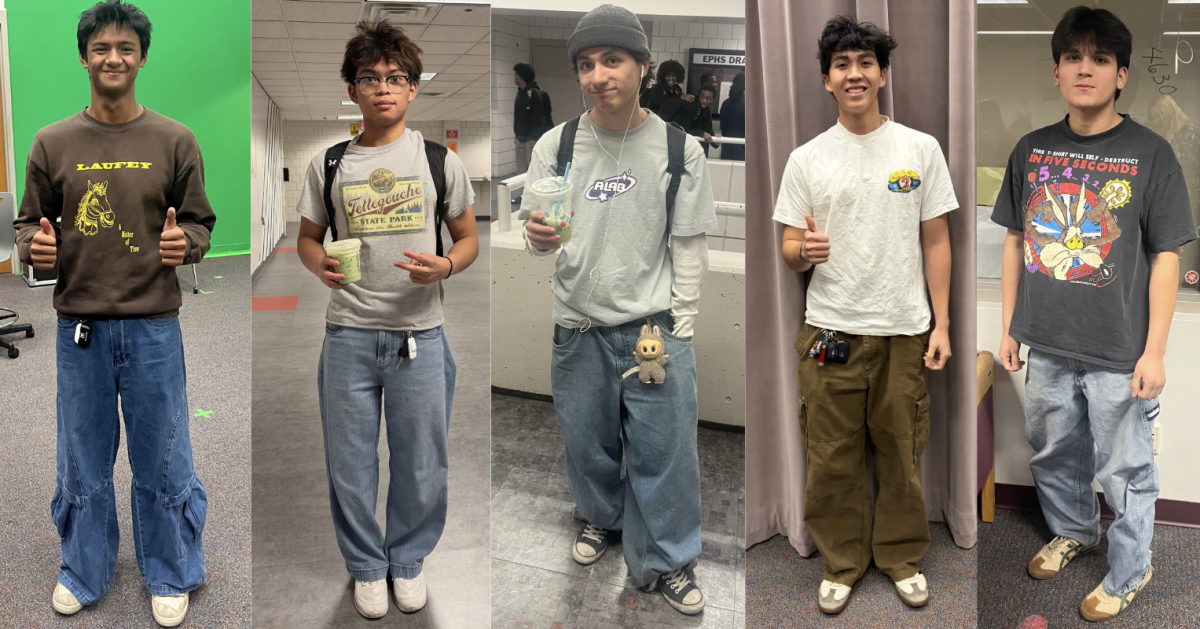
While the “performative male” term on the internet has been rampantly used amongst students at Eden Prairie High School to describe their peers, many don’t seem to have a strong grasp on what being performative actually means. The trend originally stemmed from the idea of poking fun at men who act in a certain way only to gain attention from women, and at the beginning, being a performative male basically meant pretending to like or do things that you don’t actually like to do just to appear as more attractive/relatable to women. However, as the trend started to spread and become more devolved, as almost all trends do, it changed from a way to criticize misogynistic men into a misogynistic term itself.
Participating in feminine activities, listening to artists with large female fanbases, and dressing with style have all now turned into things that most guys at EPHS can’t do without being considered performative. To learn more about the term and its meaning, we spoke with a few students at the high school with “performative male” allegations against them.
You can get called performative for doing almost anything that might appeal to a woman. For EPHS senior Victor Dsouza, his love for his favorite singer is what started his allegations.
“I think I only get called performative because I listen to Laufey,” he shared. Laufey, the young Icelandic jazz pop singer, has been used by many men to appeal to women. Throughout all forms of nature, males from different species will act in a certain way to attract attention from their female counterparts. For example, there are many species of birds in the tropics where it is commonplace for the male bird to perform an elaborate dance for the female bird in order to attract her as a mate. In humankind, we see men pretending to listen to certain artists that women like to attract them. Because so many girls at EPHS and throughout the world have been duped into thinking a guy also loves their favorite singer (when in reality he has no idea who that singer is) they don’t believe it when a guy actually listens to them.
“I’ve been listening to her since 2022, when she only dropped EPs,” Dsouza continued. “I’m not performing for anybody — I just like her music. That’s what I wish people would understand.” When your favorite singer suddenly gets considered performative to listen to, it becomes hard for many to believe that you actually listen to them. This makes it difficult for real Laufey fans like Dsouza to be able to express their interests without being called a performative male.
On the other hand, like the male birds in the tropics, there are also guys who pretend to listen to certain artists because girls like them. However, this isn’t something that only performative men do — the majority of the population, males and females, should all be able to admit that there is at least one instance in their life where they acted more interested in something than they really were in order to appeal to someone or gain their attention. Bjarne Bacus, a junior at EPHS who is frequently described as a “performative male”, bravely shared a time where he did so to impress a girl.
“When I was younger I started playing guitar for the [girls I liked],” Bacus shared. “I also started drinking matcha and rock climbing for them as well,” he joked. Matcha, the Japanese green tea that exploded as a trend at cafes around the world toward the end of last year, is a drink that men often get called performative for drinking. The joke started when many women started to notice that men who tended to be performative also pretended to like matcha in order to impress them. Bacus also shared that he drinks matcha for the “aesthetic” and not because he actually likes how it tastes.
Luis Cortes and Derrick Srun, two seniors at EPHS, shared that they brewed matcha on the high school’s CCC (Camping, Climbing, and Canoeing) camping trip just to be seen carrying around the cup without actually drinking it. While he has drunk matcha performatively, Cortes further explained that he was a fan of it before it was even considered performative.
“I used to drink matcha when I was like eleven,” he shared. “Now it’s like this big thing, and you get called performative for it.”
While he joked about matcha, Srun emphasized that most of the allegations against him are exaggerated.
“I think it is like a bad title which has been given upon me and I think it is not true,” he said. “I am not performative.” Srun explained that he does not see himself as part of the trend at all. “I did not start the performative male trend. I started the Derrick trend. I am just Derrick. I am just myself.”
Derrick also discussed what being performative means to him. “Doing something for other people’s approval. Doing stuff just for other people,” he said. He and Cortes both drew a strong distinction between “fronting” and “performing.”
According to them, fronting is pretending to like something you do not like, while performative behavior is about trying to gain approval on a broader scale.
Junior Liam Hedges Ortiz, another student who gets labeled as performative, shared a similar frustration. “Most of my friends have described me as performative,” he said. “Do I consider myself performative? No. I think it is just a lifestyle honestly.” For him, the things people call performative are simply part of his daily routine. “I drink my matcha. I listen to Clairo. Nothing much more than that. I am kind of just a simple guy.”
Ortiz owns one Labubu, which he purchased at the State Fair and named it “evil Jennifer”. Labubu are collectible plush toys that became very popular amongst “performative men” earlier this year. The toys originated in Hong Kong and are considered very trendy by many.
“It is really just my lifestyle,” he said about the allegations. He even claimed he influenced others. “People are actually copying me. I kind of started all this. I put people on.”
Like many students, he acknowledges that some activities can look performative from the outside. For example, he admitted to listening to records instead of using AirPods because he lost them. His matcha habits are equally self-aware. “I do not order matcha. I say that I drink it but that is just like performative. It is just who I am,” he said.
The “performative male” trend does more than just poke fun at guys who drink matcha or listen to certain artists. It sends a message about what it means to be a man and what is considered acceptable behavior, which can have real consequences for students at Eden Prairie High School and beyond. By labeling everyday interests and activities as performative, the trend pressures boys to fit into a very narrow definition of masculinity, where liking something considered “feminine” or showing interest in art, fashion, or even emotional vulnerability is automatically suspicious. Suddenly, enjoying music from a female-led artist or wearing a style that does not align with hyper-masculine norms becomes a potential threat to someone’s reputation.
This kind of labeling reinforces outdated gender stereotypes by implying that there are strictly “male” and “female” ways to act, dress, and enjoy hobbies. At the same time, it creates an environment where girls are expected to be gatekeepers of cultural approval, judging whether a boy’s interest is genuine or just a performance.